How Player Session Timing Patterns Trigger Personalized Bonus Releases Across Integrated Sports and Slot Platforms
Freya Franke · Nov 10, 2026
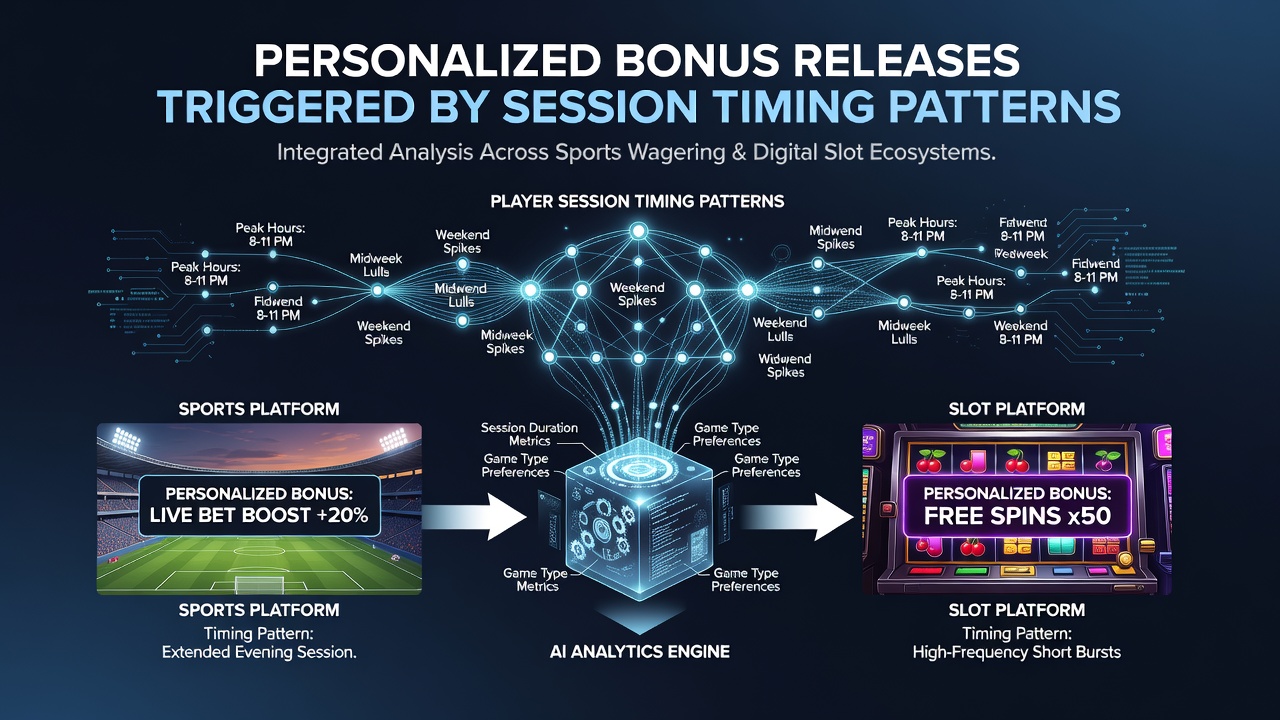
How Player Session Timing Patterns Trigger Personalized Bonus Releases Across Integrated Sports and Slot Platforms
Integrated sports and slot platforms rely on detailed analysis of player session timing to determine when and how personalized bonuses appear during active play periods, and data from multiple operators shows these systems track login frequencies, session durations, and activity peaks across both verticals to optimize release windows. Operators collect timestamps from every login and logout event, then layer those records with bet volumes and game selections to identify repeating cycles that signal optimal moments for bonus deployment. Research indicates that sessions starting between 8 PM and midnight local time often correlate with higher engagement rates in sports betting sections, while slot play tends to cluster in shorter bursts during afternoon hours according to aggregated platform logs.
Session Data Collection Across Platforms
Platforms gather timing metrics through unified player accounts that link sports wagers directly to slot activity, and this integration allows algorithms to cross-reference evening sports event viewing with subsequent slot spins in the same session. Observers note that players who complete a sports bet within the first 15 minutes of logging in receive tailored bonus prompts more frequently than those who begin with slots, because the system flags early sports engagement as a predictor of extended overall playtime. Studies from the Australian Gambling Research Centre have documented similar patterns in multi-vertical environments where timing data feeds real-time decision engines that adjust bonus values based on how long a player has remained active without interruption.
Timing Patterns That Influence Bonus Triggers
Patterns emerge when players log in at consistent intervals, such as every Tuesday and Thursday evening, and platforms respond by scheduling bonus releases to coincide with those expected arrivals rather than random distribution. Data shows that sessions lasting longer than 45 minutes without a bonus trigger prompt increased churn rates, prompting operators to activate personalized offers around the 30-minute mark for users whose historical data indicates preference for slot clusters over single large sports bets. Those who switch between sports and slots within a single session, especially after a live event concludes, encounter bonus releases calibrated to their transition points, because the timing of that switch reveals a shift in risk appetite that the system can address with targeted rewards.
Integration Between Sports Wagering and Slot Mechanics
Integrated systems connect sports event schedules with slot bonus timing so that a player finishing a major game often receives a slot-specific offer within minutes of the final whistle, and this sequencing keeps activity flowing across verticals without requiring separate logins. Platforms monitor the gap between consecutive sessions as well, releasing larger bonuses when a player returns after a 48-hour absence because timing analysis treats that interval as a re-engagement opportunity. Figures from Canadian regulatory reports reveal that cross-vertical bonuses triggered by session timing yield higher redemption rates than static offers, particularly when the release aligns with a player's established peak activity window rather than a fixed daily schedule.
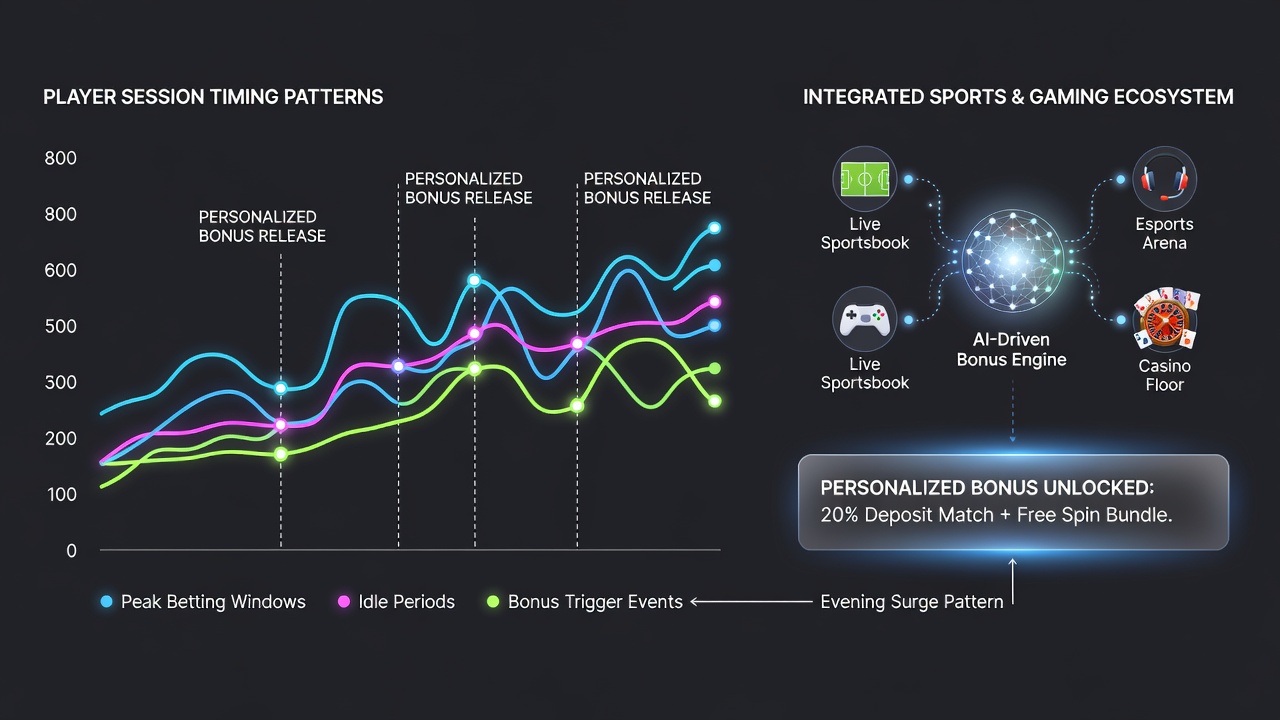
As of November 2026, several major operators have expanded these timing-based systems to include predictive elements that forecast session length from the first few minutes of activity, allowing bonuses to appear before players reach natural drop-off points. The approach relies on machine learning models trained on millions of session records, and those models adjust release frequency when external factors like major sports calendars shift player behavior patterns.
Algorithmic Personalization and Release Logic
Algorithms weigh multiple timing variables simultaneously, including time since last bonus, average session length over the prior month, and overlap with popular sports events, then calculate a probability score that determines whether a bonus should trigger immediately or after a short delay. Players who maintain consistent evening logins across both sports and slots receive progressively larger offers as their streak lengthens, because the system treats sustained timing regularity as an indicator of loyalty worth reinforcing. External data from the Nevada Gaming Control Board shows that operators must log these timing-driven releases for compliance purposes, ensuring the personalization stays within regulatory boundaries while still responding to observed behavioral rhythms.
Regulatory and Operational Considerations
Regulatory frameworks in multiple jurisdictions require transparency around how timing data influences bonus eligibility, and operators address this by publishing general guidelines that explain session tracking without revealing proprietary algorithms. Platforms operating in November 2026 continue to refine these systems as new sports seasons introduce fresh timing variables, such as late-night international events that alter traditional player login curves. Industry reports confirm that the combination of sports and slots timing data creates more granular player profiles than either vertical could achieve alone, resulting in bonus releases that feel more relevant to individual routines.
Conclusion
Player session timing patterns serve as the primary trigger mechanism for personalized bonus releases on integrated sports and slot platforms, with operators using timestamp analysis, cross-vertical tracking, and predictive modeling to align offers with observed activity cycles. The approach connects login regularity, session duration, and transition points between sports and slots to determine release timing and value, supported by data from regulatory bodies and research institutions that document measurable effects on engagement. As platforms evolve through late 2026, these timing-based systems remain central to how operators manage player retention across combined wagering environments.